

Leonardo da Vinci
THE RENAISSANCE POLYMATH
Leonardo da Vinci—born in 1452 in Anchiano, near Vinci, Tuscany—epitomized the Renaissance ideal of the polymath. Largely self-taught after an apprenticeship in Florence under Andrea del Verrocchio, he became renowned as a painter, scientist, inventor, and visionary whose boundless curiosity drove him to explore and master multiple disciplines. He created timeless masterpieces such as the Mona Lisa—famous for its enigmatic smile and revolutionary sfumato technique—and The Last Supper (a groundbreaking study in perspective, emotion, and composition), while his thousands of notebook pages—written in mirror script—document pioneering studies in human anatomy (through clandestine dissections), engineering (designs for machines, bridges, and weapons), hydraulics, optics, and flight (sketches of ornithopters and helicopters centuries ahead of their realization).
Da Vinci's insatiable curiosity and interdisciplinary approach fused art and science, influencing fields ranging from the scientific method to modern anatomy and aeronautics. Although many of his inventions remained conceptual and few paintings were completed, his work showcased the boundless potential of human creativity and careful observation of nature. Leonardo died in 1519 in France under the patronage of King Francis I, leaving a legacy that continues to inspire innovators, artists, and thinkers as the ultimate symbol of Renaissance genius—where imagination, precision, and relentless questioning converge to expand the boundaries of what is possible.
BADGE
Nature is the Source
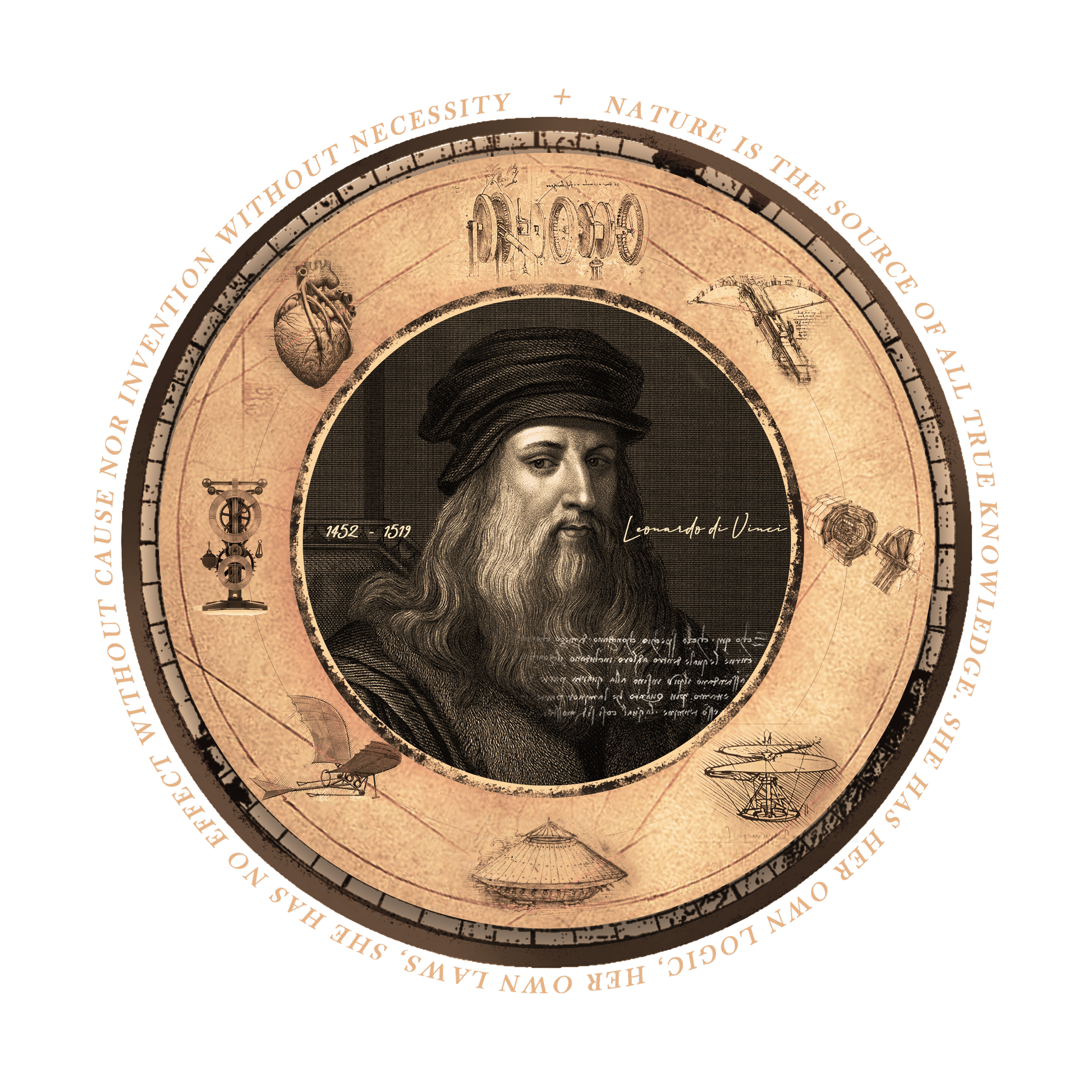
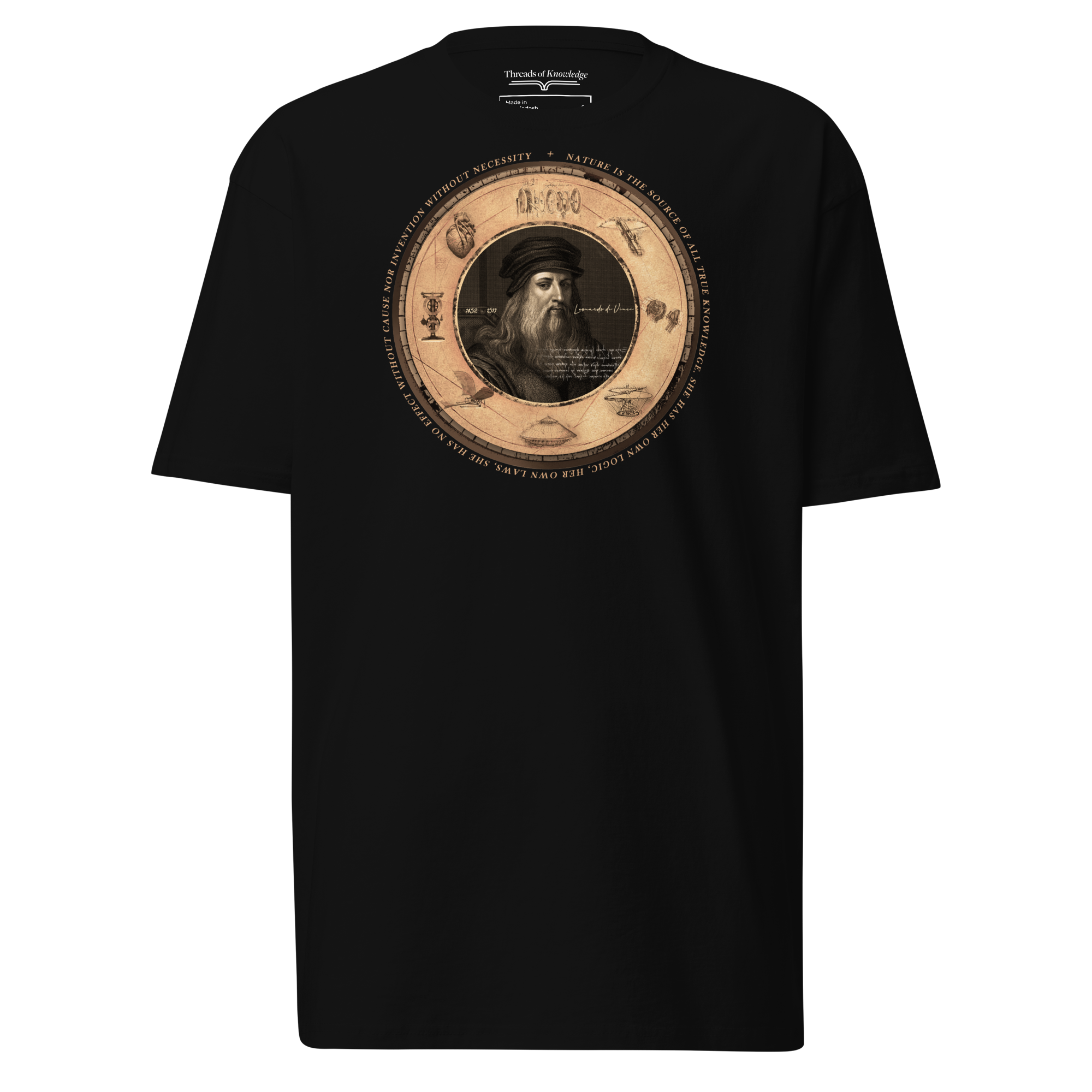
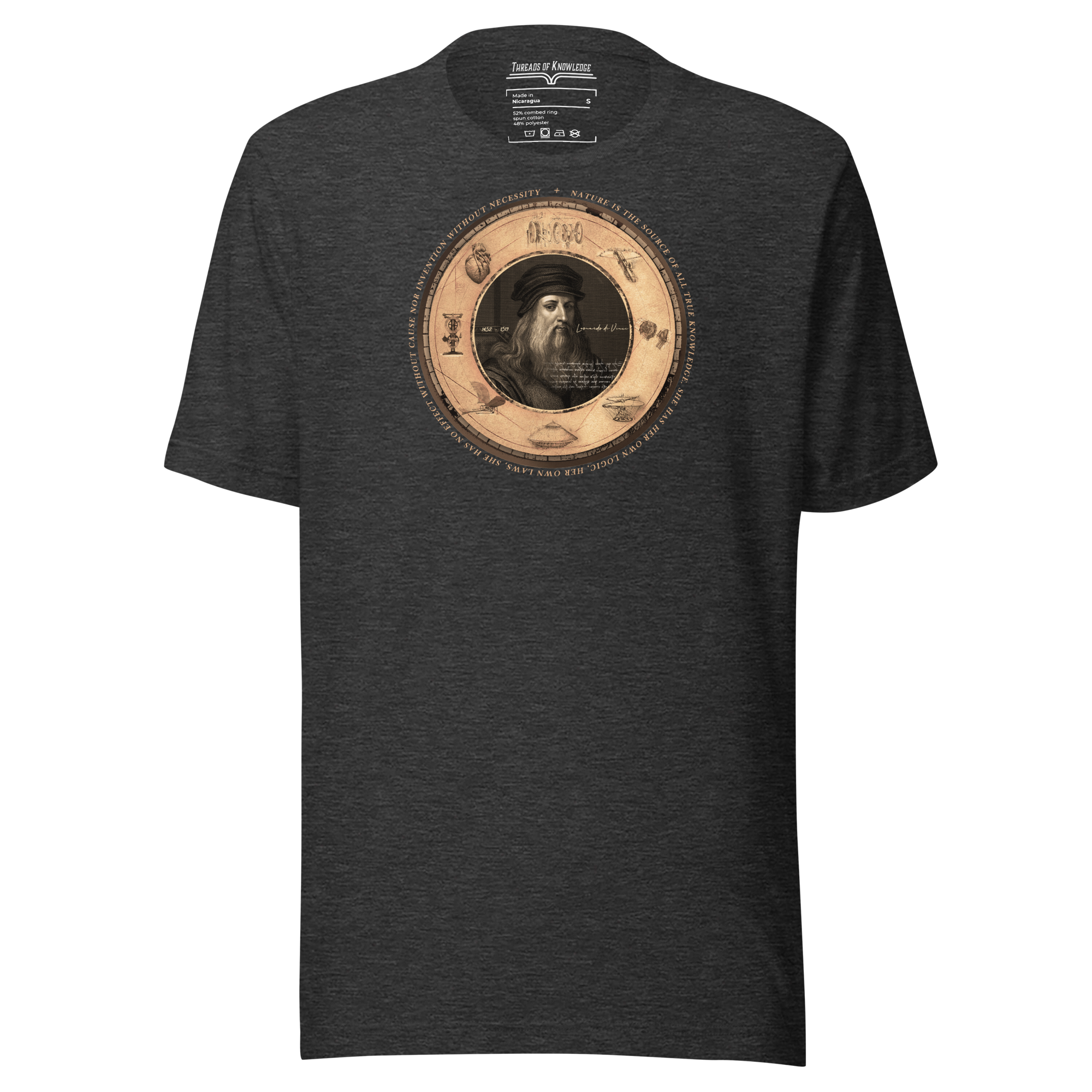
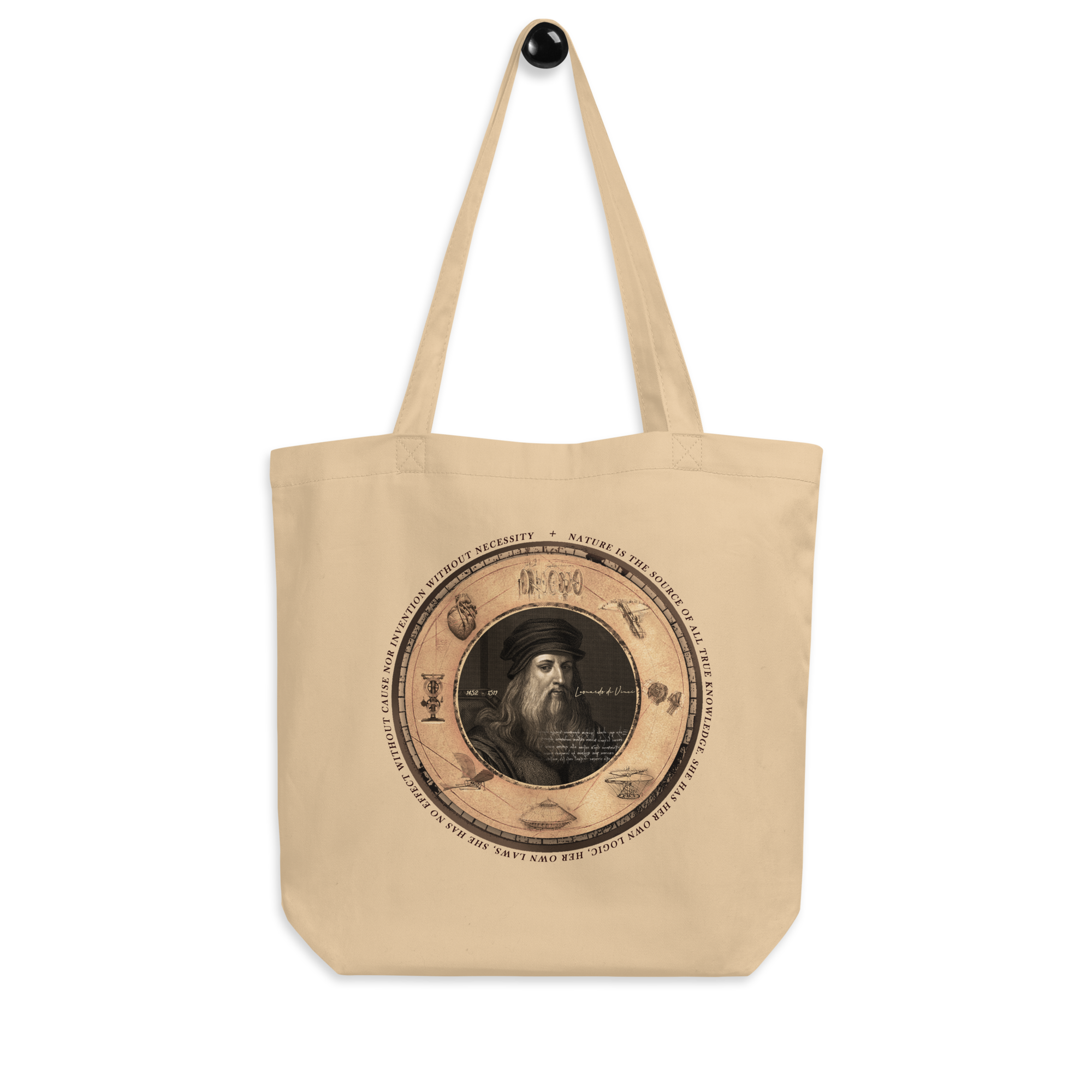
The badge's artistic features are a testament to the Renaissance period, encapsulating the essence of Leonardo da Vinci's genius through a rustic, sepia-toned design that exudes both antiquity and timelessness. The central portrait of Leonardo, rendered in a classical, etched style, serves as the focal point, surrounded by a circular arrangement of his most notable inventions and anatomical studies. The use of earthy colors and textured backgrounds evokes the parchment and ink of da Vinci's original manuscripts, tying the artwork to the era of the 15th and 16th centuries.
The intricate clock depicted in the badge symbolizes da Vinci's accurate timekeeping devices and showcases his mastery over mechanics and his deep understanding of the cosmos, including the phases of the moon. The Codex Atlanticus, representing da Vinci’s vast collections of sketches and writings, underlines his insatiable curiosity and his methodical approach to documenting the world around him. The tank and flying machines, also featured, highlight his visionary ideas in warfare and aeronautics, demonstrating his ability to merge art with engineering.
The anatomical heart, delicately drawn, speaks to da Vinci's profound understanding of the human body and his pioneering work in human anatomy, where he pursued the symmetry and function of the body with the same reverence he had for his mechanical designs. His belief in the harmony of nature's forms is evident here, as is his quest to align human innovation with the natural world.
Encircling the badge is a quote that encapsulates da Vinci's philosophy: "Nature is the source of all true knowledge. She has her own logic, her own laws; she has no effect without cause nor invention without necessity." This quote reflects his approach to learning and creating—rooted in observation, driven by necessity, and guided by the intrinsic logic of the natural world.
Notable badge elements:
Overall design representing the parchment and ink of da Vinci's original manuscripts
Leonardo da Vinci's accurate timekeeping devices
The Codex Atlanticus—a 12-volume set of da Vinci’s drawings and writings
The tank and flying machines, bringing attention to his mastery of mechanical engineering and insight into the physics of the natural world
The anatomical heart, highlighting da Vinci’s understanding of human anatomy
Encircling the badge, the quote, "Nature is the source of all true knowledge” encapsulates da Vinci's philosophy. It reflects his approach to learning and creating, which is rooted in observation.
This badge depicts da Vinci’s holistic view on bridging the gap between art and science, creating inventions and artworks that were both beautiful and functional, timeless and innovative.
Shop Our Products Below
Nature is the Source
Hoodies
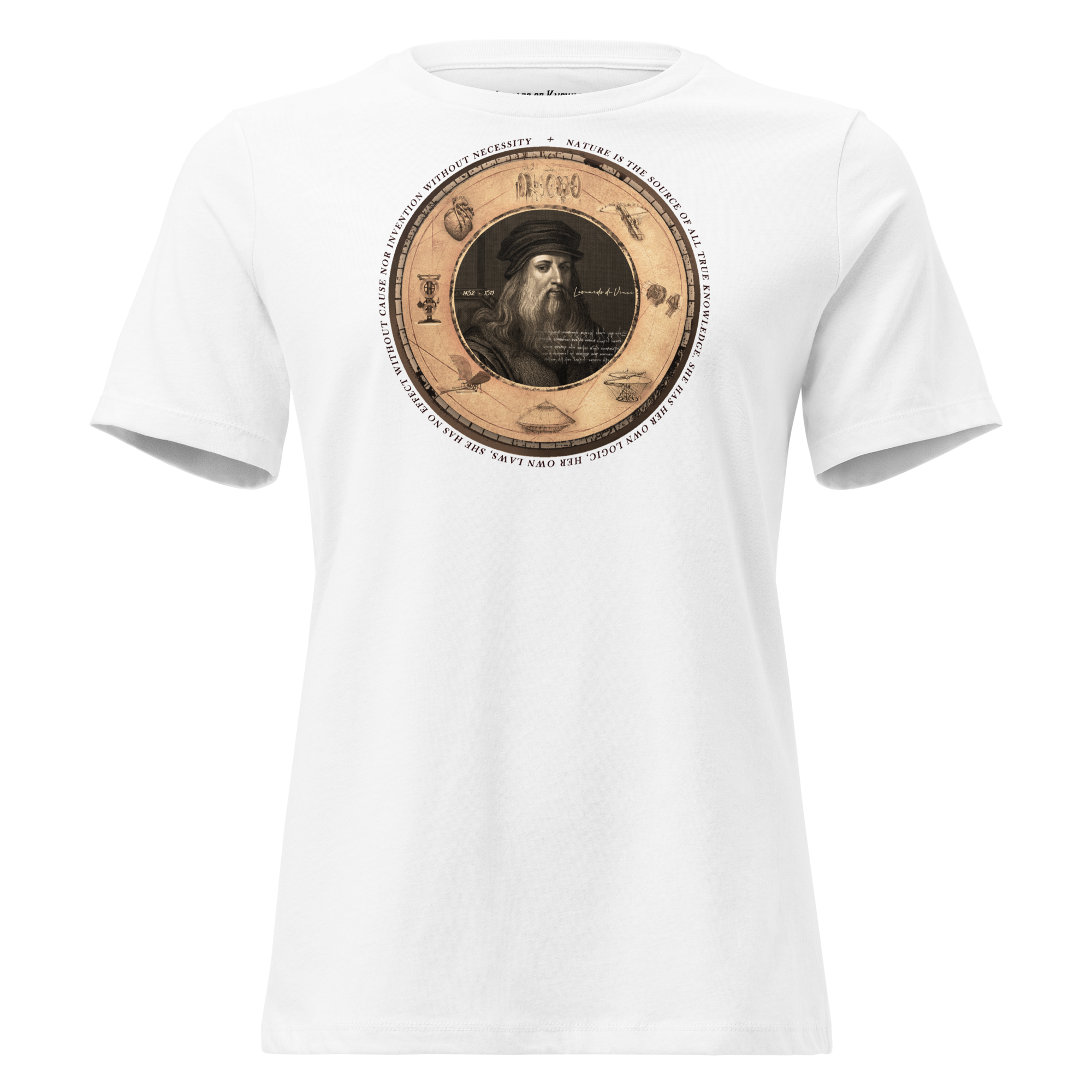
Women’s T-shirts
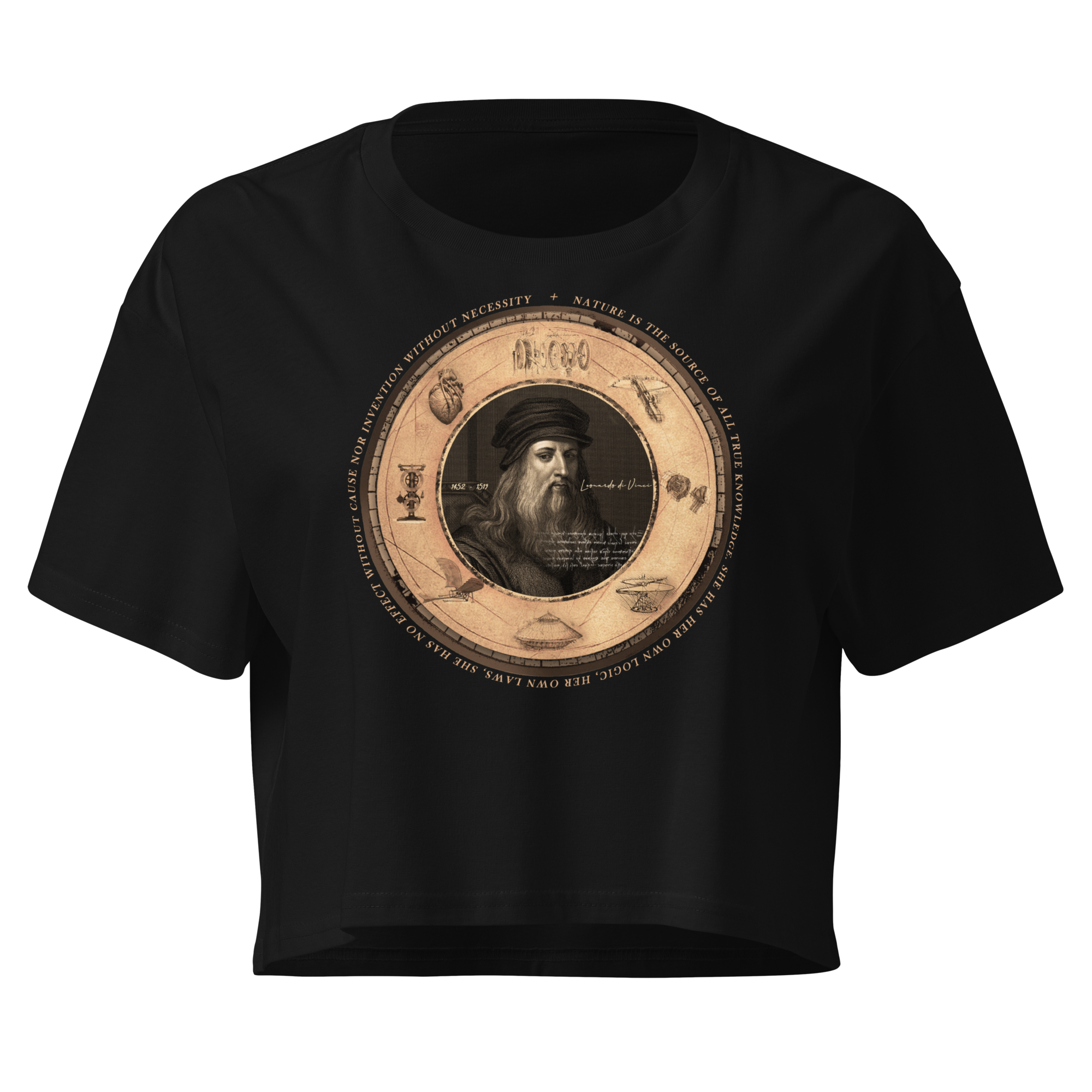
Men’s T-Shirts
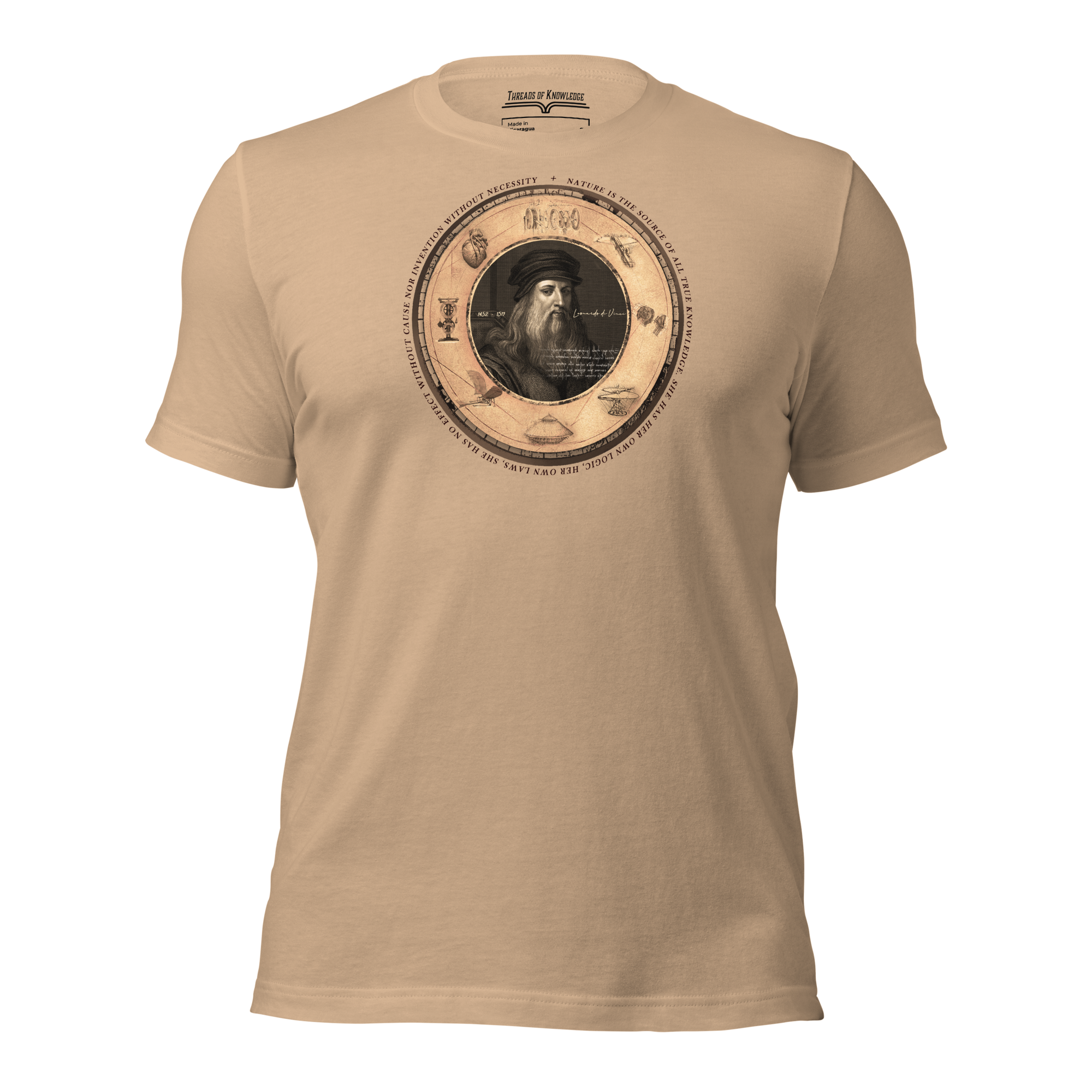
Unisex T-Shirts

Notable badge elements:
• Overall design representing the parchment and ink of da Vinci's original manuscripts
• Leonardo da Vinci's accurate timekeeping devices
• The Codex Atlanticus—a 12-volume set of da Vinci’s drawings and writings
• The tank and flying machines, bringing attention to his mastery of mechanical engineering and insight into the physics of the natural world
• The anatomical heart, highlighting da Vinci’s understanding of human anatomy
• Encircling the badge, the quote, "Nature is the source of all true knowledge” encapsulates da Vinci's philosophy. It reflects his approach to learning and creating, which is rooted in observation.
This badge depicts da Vinci’s holistic view on bridging the gap between art and science, creating inventions and artworks that were both beautiful and functional, timeless and innovative.
________________________
Apparel details:
• 100% cotton face
• 65% ring-spun cotton, 35% polyester
• Front pouch pocket
• Matching flat drawstrings
• 3-panel hood
THIS HOODIE RUNS SMALL. For the perfect fit, we recommend ordering one size larger than your usual size.